Utah Food Services Catering
Wedding Caterer
+1 801-531-0226
Standalone profile
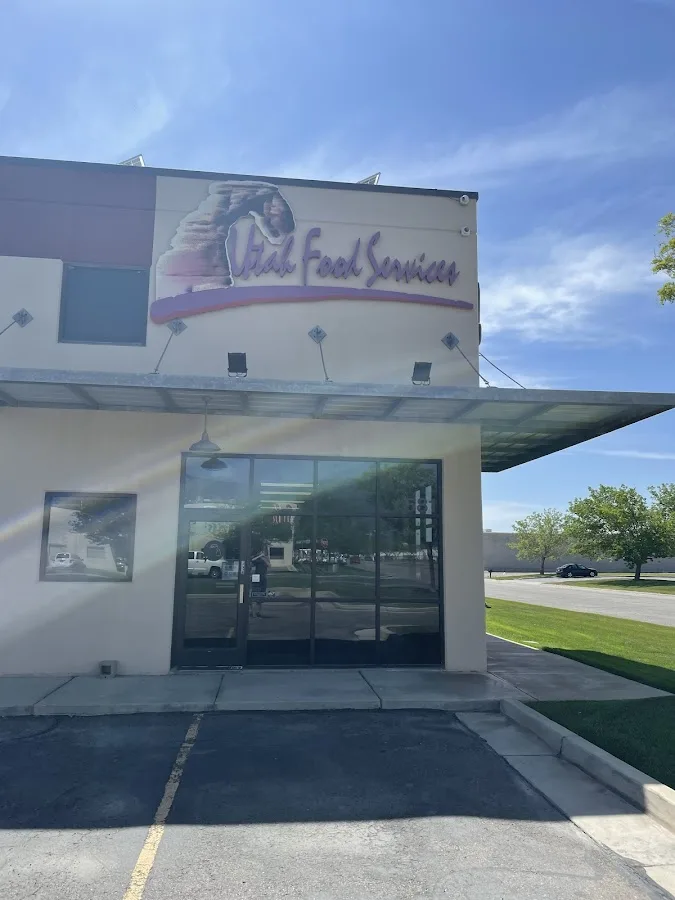
The Menuevents on the kitchen's roster
Standing Servicepractice overview
Utah Food Services Catering is a caterer or event-food provider in Salt Lake City, UT. Use this profile to review public signals such as Corporate events, Wedding catering, and 1, then confirm current scope, availability, and fit directly.
Utah Food Services Catering is listed in Salt Lake City, UT as a caterer or event-food provider in the catering and event food service directory.
This profile is written for hosts, planners, and teams comparing menu fit, service style, staffing, delivery, and event logistics who want a practical way to compare public facts before they call, book, visit, or request professional help.
The goal is not to rank the provider or promise an outcome; it is to organize the visible evidence into questions that reduce confusion.
The most useful public signals for this listing are Corporate events, Wedding catering, 1, corporate-catering, wedding-catering, and catering service Salt Lake City.
Treat those signals as a checklist rather than a guarantee.
A public category, review phrase, or website label can show what the provider appears to discuss, but it cannot prove current staffing, inventory, pricing, credentials, calendar availability, or the exact scope accepted today.
Start by confirming which event types are accepted, how minimums and timing work, what dietary claims must be confirmed, and who coordinates delivery or staff on event day.
Those questions keep the conversation anchored in the reader's actual need instead of a broad directory category.
If the answer is vague, ask for a clearer explanation of what is included, what is excluded, and what information the provider needs before giving a reliable next step.
Location still matters.
Salt Lake City, UT catering and event food service can affect travel time, appointment rules, service area, local regulations, parking, accessibility, seasonal demand, and nearby alternatives.
A listing that looks relevant on paper can still be a poor fit if the location, timing, or required preparation does not match the reader's situation.
The contact data in this record includes a listed phone number, an official website link, and a street-address reference.
Use those details to verify the current path before sharing sensitive information or making plans.
If a phone number, address, or website has changed, rely on the provider's current confirmation rather than on an older directory snapshot.
The public record does not expose a strong review base in this snapshot, so direct confirmation matters more than rating-based assumptions.
When comparing similar options on caterpgh.com, keep the comparison consistent: same location, same timing, same requested scope, and the same must-have details.
That makes answers easier to evaluate and prevents a polished but incomplete listing from looking stronger than a clearer, more relevant provider nearby.
Strong pages make uncertainty visible.
If public sources do not show a detail, the page should say so indirectly by asking the reader to verify it.
That is especially important for professional, healthcare, legal, automotive, venue, travel, and local-service categories where prices, credentials, policies, and availability can change after publication.
Do not assume menu, pricing, staffing, or availability unless the provider confirms it.
Use the profile as preparation, not as a final recommendation.
The right decision should come from current provider confirmation, source-backed facts, and the reader's own requirements rather than from copied marketing language or a generic template.
A careful reader should also note what is missing: exact prices, written policies, current openings, staff names, credentials, insurance language where relevant, warranty terms, and any rule that depends on the reader's specific case.
Missing information is not automatically a negative signal, but it is a reason to ask better questions before relying on the listing.
For repeated comparison, save the details that are confirmed directly and separate them from details that only appeared in public search results.
That habit makes follow-up easier, reduces misunderstandings, and helps the reader compare nearby alternatives without turning a directory profile into a promise.
The best use of this page is preparation.
Read the public facts, decide which details matter most, then confirm those details through the provider's current contact path.
That keeps the directory useful without pretending that public snippets can replace a current conversation, official policy, signed agreement, appointment confirmation, or professional judgment.
If two nearby listings look similar, compare the quality of the answers rather than the number of marketing phrases.
Clear limits, plain explanations, and consistent contact details usually matter more than broad claims.
A provider that explains what it can and cannot do is often easier to evaluate than one that leaves every important detail unstated.
Keep source timing in mind.
Search results, review snippets, category labels, and business pages can lag behind real operations.
This directory profile should therefore be treated as a structured note: useful for organizing questions, but still dependent on direct confirmation before money, travel, documents, property access, vehicle access, health decisions, or legal decisions are involved.
House Notesfrom the kitchen's own page
-
Kuisel - Wedding Liz Strom - Venue Testimonial Dave Coyne - Community Event Kris Bosman - Corporate Event “Thank you so much to the UFS team for your hard work. We truly thought everyone from UFS was exceptional and could not
From their site
Mise en Placebooking facts
- Phone+1 801-531-0226
- Siteutahfoodservices.com
- Kitchen base581 900 N, North Salt Lake, UT 84054, United States
- SpecialtyWedding Caterer
- Service areaSalt Lake City · West Valley City
- Profile tierStandalone
- Data score74 / 100
Regional Practicepermits & service customs in this region
In the Midwest, Mountain, and Plains states, licensing is moderate — county-level health permits, with state food-handler cards in many states. Wedding venues in rural areas often have a "preferred vendor" list, partly because of kitchen-equipment compatibility (some venues only have pass-through warming rooms, not full kitchens). Winter events require the kitchen to plan for snow-route logistics and food held at temperature during travel.
Consider Before You Callfive questions to bring to the booking
- What's the minimum headcount for a corporate booking, and is there a separate weekday vs. weekend rate?
- How far in advance do weddings book up, and is a tasting offered before the contract is signed?
- What is included in the per-head price — appetizers, dessert, non-alcoholic drinks, gratuity, taxes?
- Do you carry a current health-department permit and a certificate of insurance the venue can request?
- How many courses or stations are within the per-head package, and what counts as an upgrade?
Table Questionsfrequent asks at the booking
- How is catering priced — per head or per dish?
- Most catering is priced per-person ("per-head") for a fixed package: appetizers and main and dessert and non-alcoholic drinks. Service staff, rentals, and the bar are usually separate line items. À-la-carte and weight-based ("market price") pricing is common at high-end and cuisine-specific kitchens. Confirm whether tax, service charge, and gratuity are inside the per-head number before signing.
- How far ahead should the kitchen be booked?
- Wedding caterers typically book six to twelve months ahead for prime spring–summer dates. Corporate events book two to four weeks ahead, sometimes shorter. Drop-off catering for office events can be twenty-four to seventy-two hours. Last-minute bookings limit the menu, since the kitchen has to source from what is already in their order rotation.
- Drop-off versus full-service — what is the practical difference?
- Drop-off means the kitchen delivers food (hot or cold) and leaves — no servers, no bar, no on-site staff. Full-service brings servers, bartenders, an event captain, and sometimes rentals (linens, glassware, china). Full-service typically costs thirty to sixty percent more than drop-off for the same food.
- How is the menu tasting handled?
- Most full-service caterers offer a tasting before the contract is signed (sometimes free, sometimes a credit-on-booking fee). The tasting is a curated four to six dish version of the proposed menu. Bring the decision-makers and write notes on each dish; the tasting is to lock in the menu, not redesign it from scratch.
- What is the difference between a wedding caterer and a regular caterer?
- A wedding caterer specializes in reception dining at scale — typically fifty to three hundred guests with a fixed timeline (cocktail hour, plated dinner, dessert station). Wedding caterers often have venue partnerships, contracts written for wedding contingencies, and staff trained for the wedding-day flow. A regular ("event") caterer covers a broader range of events but may not be staffed for the long, multi-stage flow a wedding needs.
- Tipping and service charges — how do they work?
- Service charge (typically eighteen to twenty-two percent) is added by the caterer to cover front-of-house labor; it is not a tip — it goes to the company. If the contract says "service charge" not "gratuity," a separate tip for the captain, servers, and bartenders is appropriate. Standard tipping for catering staff is ten to twenty percent of the food bill, distributed among the team.